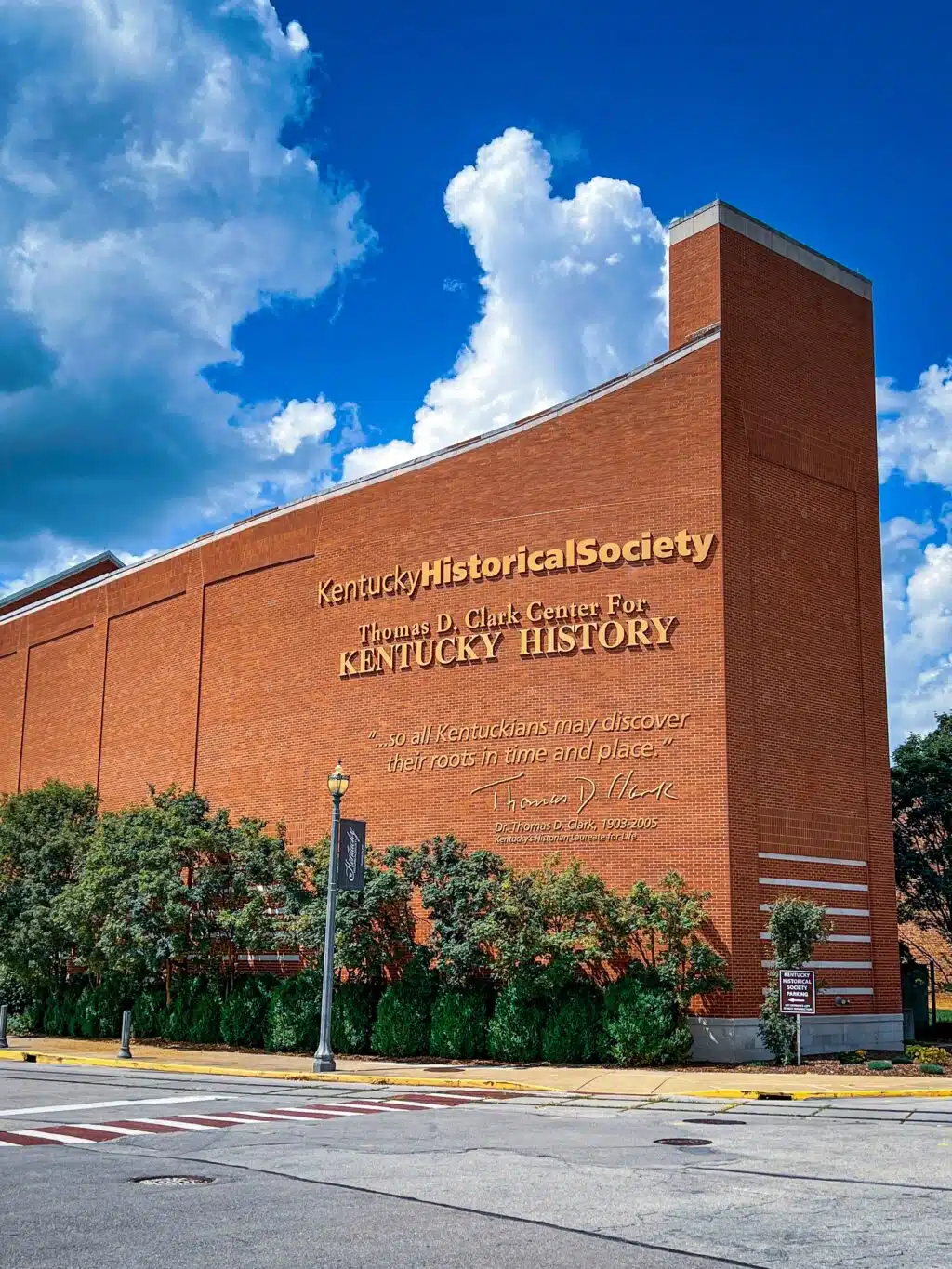
Thomas Dionysius Clark may have had the honey of Mississippi in his voice and courtly manner, but he had the Bluegrass in his heart and soul.
Credited with saving a large portion of Kentucky’s printed history which is now documented in the Kentucky Department of Libraries and Archives, he was unofficially the Dean of Historians, and officially the Historian Laureate of the Commonwealth of Kentucky.
Add to that a long and distinguished tenure (70 years) at the University of Kentucky professor, and it is only fitting that the Kentucky Historical Society (KHS) headquarters in Frankfort be named in his honor.
The Thomas D. Clark Center, a Smithsonian affiliated museum, is the repository for exhibits, archives and a research library containing books and papers chronicling the tumultuous history of the Commonwealth of Kentucky.
This multi-million-dollar learning and research center in downtown Frankfort attracts not just scholars and academics, school children, and newcomers to the state eager to learn about its rich, vibrant history, but also visitors who enjoy “historical tourism.”
Museum visitors usually begin with “A Kentucky Journey” exhibit which will take them from prehistoric and early indigenous days to the state’s modern period.
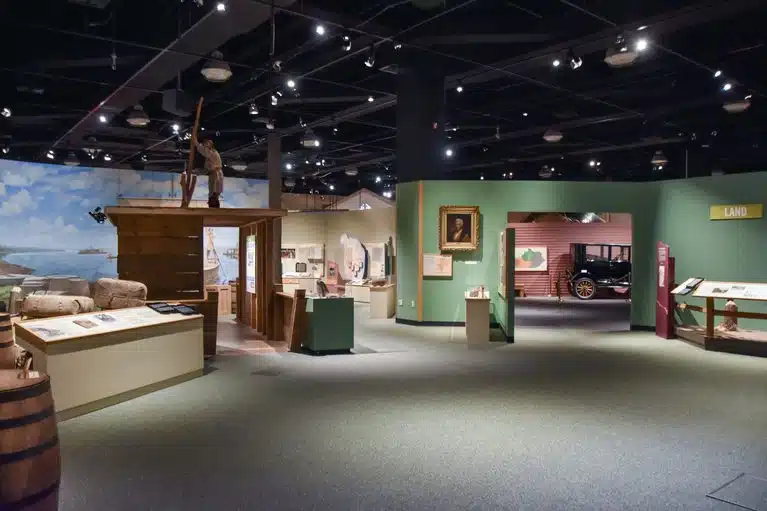
It takes about two hours to make this journey, which is pretty good considering that it took prehistoric people, pioneers, settlers, Native Americans, adventurers and all those who followed about 12,000 years.
From President Abraham Lincoln’s pocket watch to notorious madam Belle Brezing’s parlor mirror, museum artifacts help tell the story of famous Kentuckians.
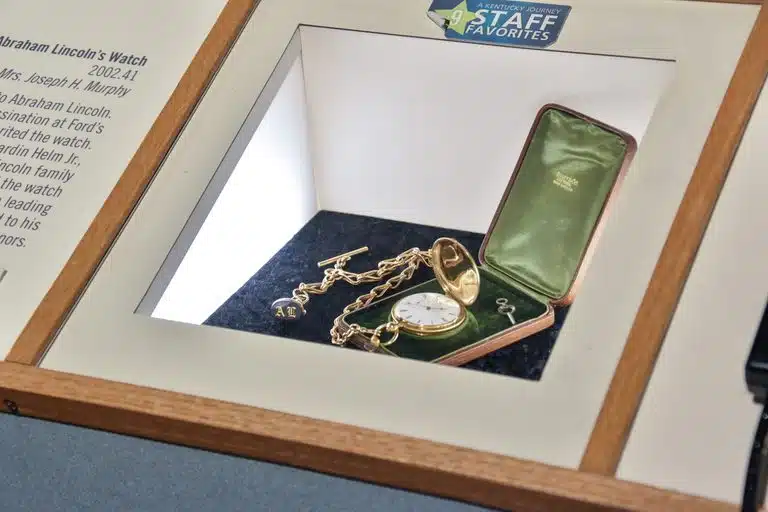
Through its collection of more than 3,000 items, “A Kentucky Journey” explores the state’s impact on such cultural icons as bourbon and baseball bats, and the evolution of horsepower from Thoroughbreds to Corvettes.
Those interested in the commonwealth’s often volatile politics will be fascinated by the Hall of Governors Exhibit, a portrait gallery of chief executives who often were as colorful as the Bluegrass State they governed.
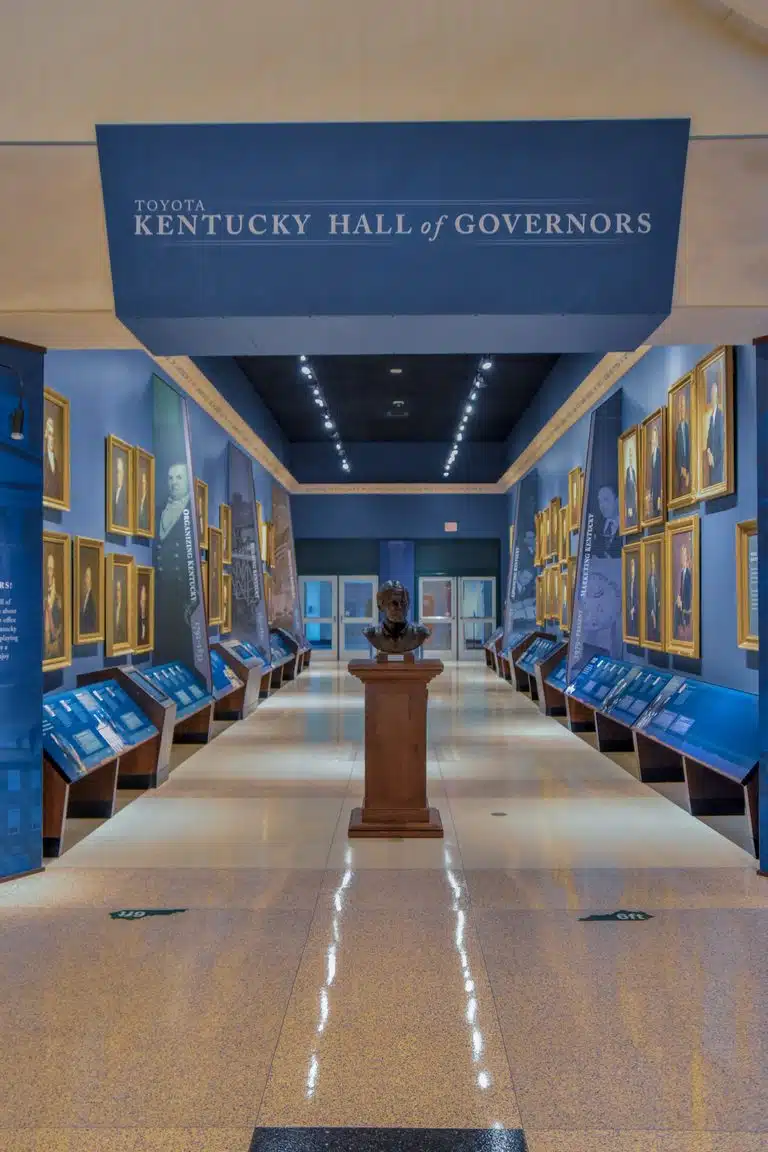
Here, you’ll learn about one governor (Augustus Owsley Stanley), who – caught in the battle between irate bourbon barons and the even more irate Women’s Temperance Union – did the only sensible thing. He resigned.
You’ll also discover the grisly story of another (William Goebel) who became the victim of an assassin’s bullet, becoming the only governor to be killed while in office. Goebel died four days after being sworn in.
All states have their myths, and Kentucky is no exception. Did Daniel Boone really wear a coonskin cap and did Honest Abe really walk a mile to return a penny that had been given to him in error?
Learn how memory and perspective play a large part in our perception of an event in one of the Clark Center’s newest exhibits “Revolution to Statehood: Kentucky’s Founding in History and Memory.”
This exhibit shows how memory of an event often clashes with factual accounts, and poses the question – can we learn how to accept those factual accounts without losing the nostalgia we associate with the event?
It also asks visitors to look beyond the conventional narrative and discover a complex human experience shaped not by myth but by successes and failures, sacrifices and achievements.
“Revolution to Statehood’s” companion exhibit, “Courage of the Commonwealth,” tells the stories of early settlers who had a significant impact on the outcome of the Revolutionary War, and the birth of not just a new state, but a new nation.
Not all the Center’s exhibits are permanent. The Clark Center currently has two rotating exhibits – one devoted to a beverage and the other to a birthday.
The former, “Bourbon & Bluegrass,” highlights the undisputed fact that while bourbon can be made anywhere, 95 percent of the world’s best is made right here in Kentucky.
There may be some debate as to what part of the commonwealth saw the first mash bill, but there is no debate about how its global rise, fall and rise again has shaped the land, the people and the economy of the state.
Some of the artifacts found here include prescription style whiskey bottles which allowed for bourbon to be used for “medicinal purposes” during Prohibition; vintage distillery documents, and authentic cooperage items and tools used in the distillation process.
Now, about that birthday. The second rotating exhibit, “America at 250: 1776-2026” can be found in the Martin F. Schmidt Research Library on the Center’s second floor.
Peruse two of the library’s cases containing items that highlight major events in Kentucky from the start of the new nation to the turn of the 20th century.
One of the Clark Center’s most popular exhibits is one that is on loan from the State Capitol.
“Kentucky’s First Ladies in Miniature,” located adjacent to the Hall of Governors, has every First Lady beginning with Susannah Hart Shelby in 1792 and continuing to Britainy Beshear represented by a porcelain doll clad in fashionable attire that would have been de rigueur during her time as First Lady.
Beginning with more recent miniatures, the attire is the gown each wore to her husband’s inaugural ball. Phyllis George, then wife of Governor John Y. Brown, may have been Miss America, but some feel the real glamor girl among the first femmes was Ida Lee Willis (1943-47) in a slinky number that wasn’t exactly characteristic of the times.
With its diverse exhibits, the Thomas D. Clark Center is a fitting testimony to both the rich history of the Bluegrass State and the man who eloquently and passionately told its fascinating story. The Center is open Tuesday through Saturday from 10:00 a.m. to 5:00 p.m. The admission fee of $8 (adults), and $6 (Youth ages 6 to 18 and Active Duty Military) also includes Kentucky’s Old State Capitol and the Kentucky Military History Museum.